

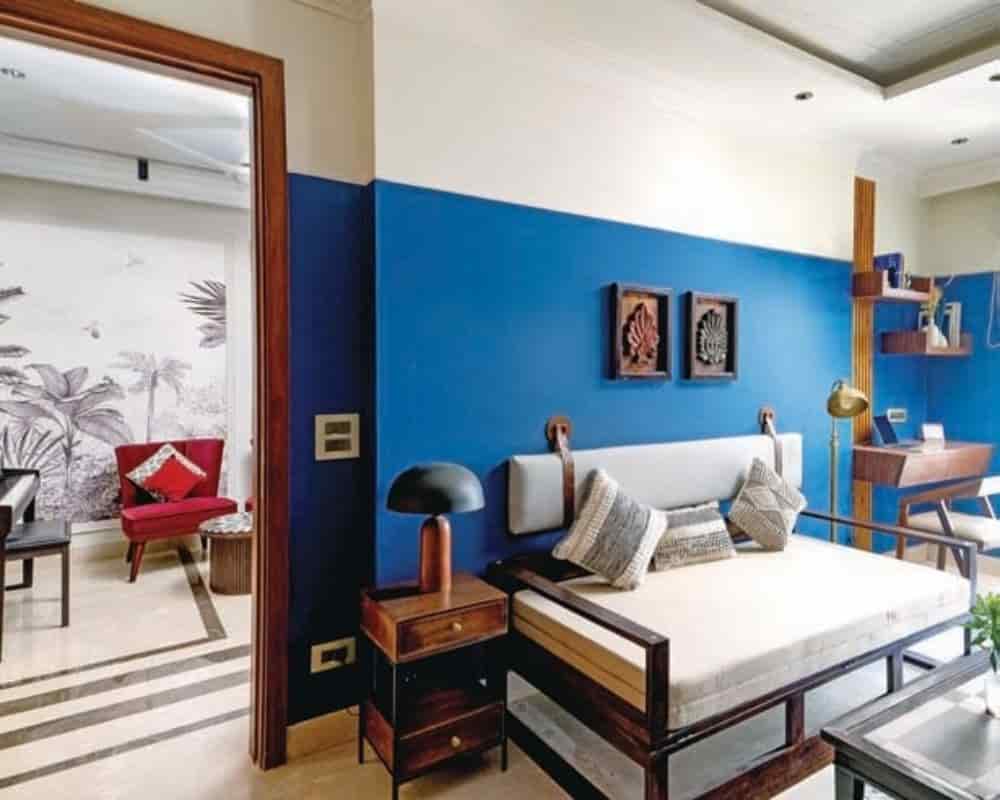
Blending craftsmanship, culture, and contemporary form, Indian design is finding its new voice — timeless, rooted, and beautifully real.
The Indian contemporary aesthetic is quietly reshaping the future of design. It marks a graceful return to cultural roots while embracing the clarity and ease of modern living. In a world where trends shift by the minute, this style stands out for its calm longevity. It treats home not as décor, but as identity — grounded, personal, and enduring.
Rather than leaning toward stark minimalism or ornate excess, this aesthetic finds its soul in balance — the meeting point of old and new, memory and modernity, restraint and richness. It’s a design language born from heritage, yet fluent in the present.

Crafted by Hand
At the heart of this movement lies a fusion of traditional craftsmanship with contemporary form. Lime-plaster walls breathe beside clean-lined teak furniture. Cane and rattan sit comfortably alongside steel and concrete. Handmade tiles, carved jaalis, and handwoven textiles soften the geometry of modern spaces.
The colour palette mirrors India’s landscapes — warm, earthy, restrained. Chalky greys, soft whites, muted terracottas, and honeyed browns create quiet elegance, allowing materials to shine for what they are: the texture of stone, the grain of wood, the irregularity of a hand-thrown ceramic bowl.
As interior designer Ritu Nanda says, “The beauty of Indian contemporary lies in its honesty — it doesn’t imitate the West or replicate the past. It evolves from who we are, right now.”
This authenticity makes the aesthetic feel both intimate and universal.
Cultural Storytelling in Modern Spaces
What makes this design language especially compelling is its ability to tell stories — personal, regional, and cultural. Arches meet straight edges. Brass accents pair effortlessly with matte black. A Bhadohi rug or a hand-embroidered cushion from Kutch becomes not an accessory but an heirloom reborn.
This sensibility resonates especially in India’s urban homes. Glass-and-marble apartments often feel detached from place, but the introduction of natural textures, vernacular materials, and handcrafted details restores warmth and belonging. Homes feel less like showrooms and more like lived-in narratives.
A Mindful, Modern Movement
Beyond aesthetics, this shift reflects a deeper cultural change. Homeowners are moving away from fast décor toward pieces that last — investments in craftsmanship, sustainability, and emotional resonance. It aligns with the global shift toward slower, more intentional living.
Mumbai-based designer Nitin Khanna captures it well:
“Today’s Indian home is not about showing off — it’s about feeling at ease. We want spaces that nurture, not impress.”
The result is a new kind of Indian home — elegant yet comfortable, rooted yet relevant, designed not only for today but for the years that follow.
Here to Stay
What began as a quiet design preference has evolved into a cultural movement — one that reclaims Indian identity through form, material, and memory. Whether in Bengaluru, Delhi, or Goa, each space adds its regional accent to this shared language of warmth and restraint
.
Indian contemporary design isn’t nostalgia disguised as modernity —
it’s evolution with memory.
It reminds us that good design, like good living, doesn’t fade with fashion.
It deepens with time.
📚 Read all articles by this author




Leave a Reply