

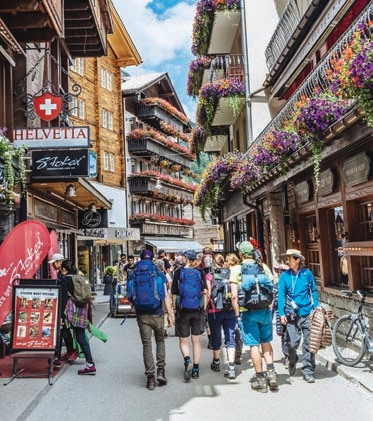
Imagine stepping out of your home and finding everything you need — groceries, a school, a clinic, a café — all just minutes away on foot or by cycle. In a car-free community, this isn’t a utopian fantasy; it’s thoughtful design. As cities evolve, planners and architects are rethinking urban life by blending global models with local wisdom, creating neighbourhoods that are livable, equitable, and human-centred.

Where Walking Becomes the Default
The heart of car-free cities lies in mixed-use, compact neighbourhoods. Homes, markets, offices, schools, and parks coexist within a walkable radius. Urbanist Jan Gehl famously said, “If you invite more cars, you get more cars. If you make more bicycle infrastructure, you get more bicycles.” Streets, therefore, can return to their original purpose — spaces for social life, leisure, and community rhythm.
Fred Kent, founder of Project for Public Spaces, echoed this vision: “If you plan cities for cars and traffic, you get cars and traffic. If you plan for people and places, you get walkable, livable communities.” Cities around the world — from Amsterdam to Detroit — have proven how walkable design reshapes daily life.
Lessons from Global Experiments
Can Delhi transform its streets into spaces for people? Around the world, the shift is already happening.
- Barcelona’s “superblocks” restrict vehicles and turn roads into vibrant open spaces.
- Ghent in Belgium revived local commerce by rerouting cars around neighbourhood cores.
- London’s LTNs and Strand Aldwych Project reclaimed major streets for pedestrians and culture.
- Entire places like Lamu (Kenya), Zermatt (Switzerland), Venice (Italy), Pontevedra (Spain), and Mackinac Island (USA) thrive with little to no car usage.
These examples show that reclaiming streets is less about restriction and more about rediscovering human-scale living. Post-war Hannover’s planning by Rudolf Hillebrecht exemplifies how traffic can be moved to the periphery, freeing the urban core — an approach Delhi could adapt around heritage zones.
Delhi’s Potential to Reimagine Itself
Neighbourhoods like Hauz Khas, Shahpur Jat, Chandni Chowk, Saket, and Malviya Nagar are perfect candidates for car-light or car-free transformations. Wider footpaths, shaded walkways, benches, mixed-use blocks, and easy access to transit can turn them into comfortable pedestrian realms.
Architect Charles Correa long advocated for cities shaped by human scale and local culture, not borrowed blueprints. Modernist Kuldip Singh and eco-conscious designer Anil Laul also reminded us that architecture must empower communities. By bringing amenities to people — not forcing people to reach amenities — Delhi can reinvent its everyday life.
Safety: A Non-Negotiable Foundation
For walking to be a natural choice, the city must be safe. Continuous sidewalks, lighting, cycle tracks, ramps, and calmer traffic are key. Safety expert Kalpana Viswanath of Safetipin rightly notes, “Walking must be a safe right for women — lighting, visibility, and clear sightlines are essential.”
Upcoming plans for Bhairon Marg and Mandi House aim to integrate pedestrian paths seamlessly with metro and bus routes — a foundational shift toward safer, smarter mobility.
Logistics, Deliveries, and Local Commerce
Car-free doesn’t mean car-less. Residents with limited mobility can use electric shuttles; cars can be parked at peripheries; deliveries can shift to cargo bikes, e-carts, and compact last-mile electric vehicles. Delhi has already tested pedestrian zones in Karol Bagh and Chandni Chowk — now the challenge is coherent parking, logistics, and transit integration.
More people walking naturally means more thriving local businesses — a truth Jane Jacobs articulated decades ago: “A vibrant street economy is born when people walk.”
Clean Air and Cooler Streets
Delhi’s air is among the world’s most toxic. Every car replaced with a pedestrian is a breath regained. Paris saw nitrogen dioxide levels drop by 40% after pedestrianising certain zones. Green boulevards, shaded paths, and tree-lined streets can help cool Delhi’s urban heat island as well.
Architect Joseph Allen Stein’s iconic Lodi Estate — “Steinabad” — already proves how greenery and architecture can coexist beautifully.
The City That Walks
Now imagine:
- Connaught Place free of traffic, its circles transformed into promenades, cafés, and galleries.
- Shanti Path rewilded, shaded, serene.
- Heritage quarters—Mehrauli, Hauz Khas, Shahpur Jat—reborn as walkable cultural districts.
In such a future, streets become stages. Children play, markets bustle, people linger, and the city breathes again.
A car-free Delhi isn’t just about mobility. It’s about belonging, connection, and reclaiming what urban life was always meant to be — lived, felt, celebrated.
The age of endless traffic may be fading. The age of walking is the new way of living.
📚 Read all articles by this author


Leave a Reply