

Photographs often communicate far more than what first meets the eye, carrying layered narratives of power, identity and perception. These tensions lie at the core of Typecasting: Photographing the Peoples of India, 1855–1920, an exhibition presented by Delhi-based DAG at Bikaner House.
Curated by historian Sudeshna Guha, the exhibition brings together 166 rare photographs from the colonial era, revealing how the camera under British rule functioned not merely as a tool of documentation, but also of classification, control and interpretation.

Rather than treating photography as neutral record-keeping, the exhibition highlights its inherent ambiguities. The images occupy an uneasy space between art, surveillance and spectacle.
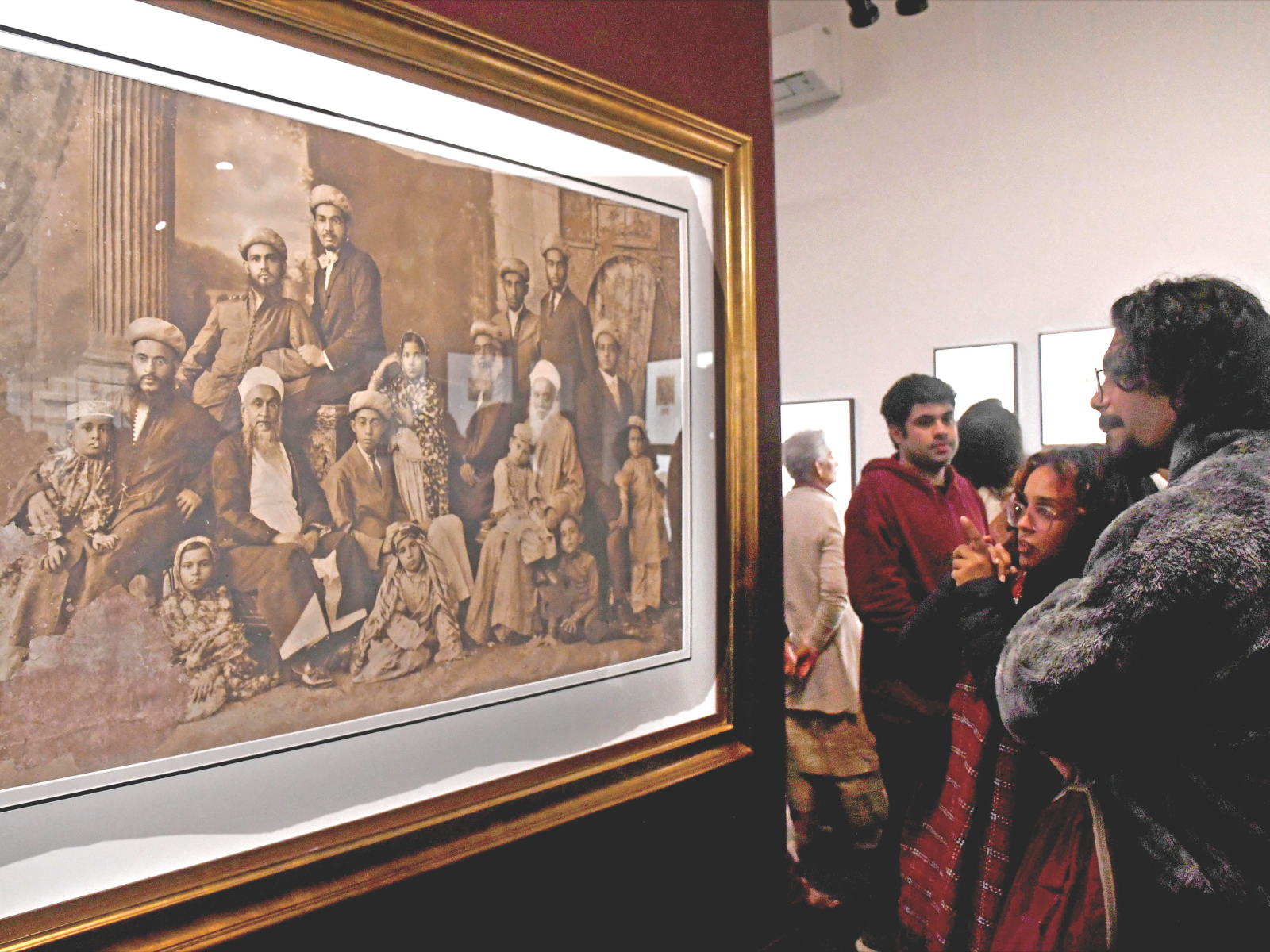
At the centre of the gallery is a striking studio portrait of a Bohra family—rich in detail, dignified in pose and intricate in composition. Though officially unattributed, Guha suggests it was likely taken by Deen Dayal, one of India’s most accomplished commercial photographers.
Enlarged in the early 20th century, the image delivers what Guha describes as a distinct “wow factor”, inviting viewers to engage with its depth and texture.

Guha situates these photographs within the broader context of colonial governance. Following the uprising of 1857, photography emerged as a powerful means of surveying and cataloguing Indian society.
Yet, she argues, these images resist singular readings. Devoid of captions, they remain fluid and performative, open to interpretation rather than fixed meaning.
The exhibition unfolds across four thematic sections: The People of India; Trade, Caste and Occupation; Tribe, Community and Anthropological Field Photography; and Beauties and Dancing Girls. The first draws heavily from The Peoples of India, an eight-volume series published between 1868 and 1875 that documented nearly 480 images of castes, tribes and professions.
Subsequent sections complicate this taxonomy by depicting tradespeople actively at work, transforming rigid colonial “types” into scenes of lived labour.

The representation of tribes reflects prevailing colonial anxieties, particularly the construction of so-called “martial races”, while the final section focused on women reveals a fraught intersection of voyeurism and agency.
Taken together, the photographs urge viewers to interrogate the gaze behind the lens and to read photography not as objective truth, but as a complex historical artefact shaped by power, performance and perspective.
📚 Read all articles by this author
Leave a Reply