

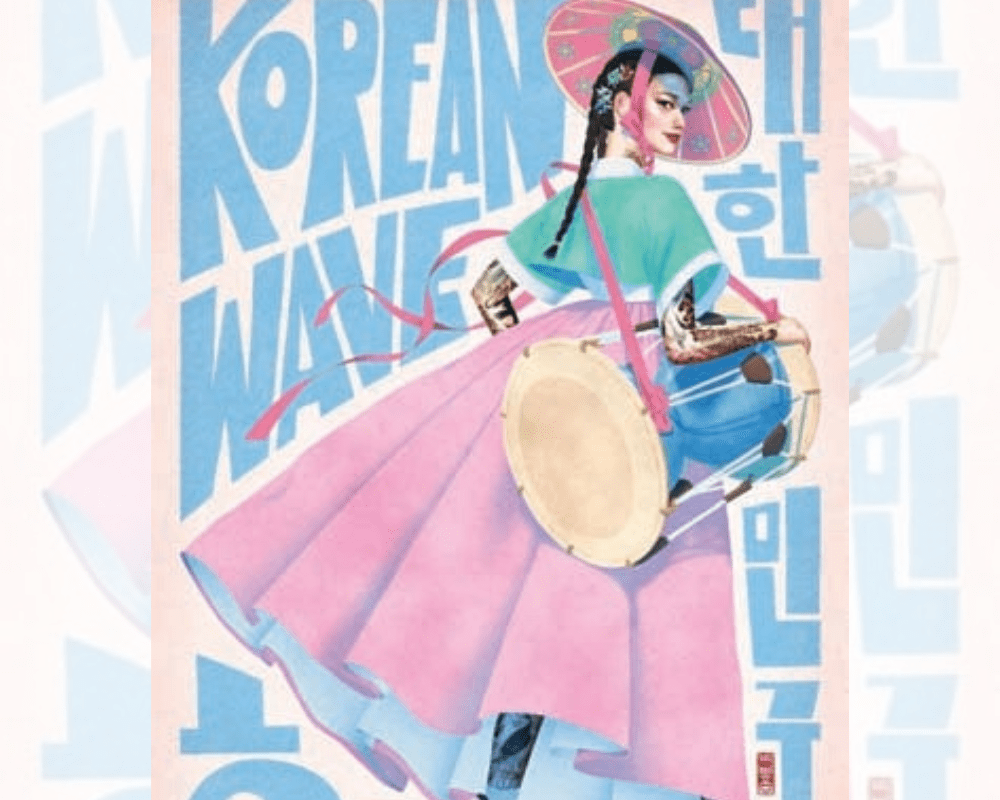
From rituals to storytelling, K-culture has turned daily life into an artful spectacle — one that now stretches far beyond the borders of Korea.
It started, oddly enough, with Novak Djokovic doing the Soda Pop dance.
On a tennis court.
At the US Open.
After winning.
Yes, that Djokovic — Grand Slam legend, mental titan — suddenly looked like a joyful part-time K-pop idol. The song comes from K-Pop Demon Hunters, Netflix’s glossy animated film where glamorous girl-group members moonlight as demon slayers in Seoul. It recently shot up the global charts, hitting the platform’s Top 10 in several countries.
Djokovic said he learnt the choreography for his daughter. Maybe. But the grin said it all — he’s caught in the wave, just like the rest of us.

Drama, Trauma & the Emotional Buffet
For me, the spiral began with K-dramas.
One week it was demon hunters, the next star-crossed lovers separated by the DMZ, before that a tortured exorcist with cheekbones sharper than any plot twist.
Korean entertainment makes the bizarre believable, the emotional hilarious, and the supernatural oddly comforting. And in between the fantasy worlds, I found myself nodding in recognition — the 30-something still living with parents, the societal pressure, the family drama that rivals any Indian joint family showdown.
K-dramas, I realised, are like an Indian thali:
something for everyone — simmering romance, overprotective mothers, nosy aunties, rich-boy-poor-girl sagas, and of course, the slow-simmering trauma.
I came for the gloss.
I stayed for the honesty — the kind we often sweep under the carpet.
Glass Skin, Snail Slime & the Gospel of Glow
And then the skincare wave hit.
Ten-step routines. Serums. Essences. Snail slime (yes, actual snail slime). Everyone online was chasing “glass skin” — luminous, poreless, almost celestial.
I told myself I’d try one product.
Cut to: me at Sephora, arms overflowing with sheet masks like I was stocking up for a natural disaster.
Soon, it didn’t feel like skincare at all — it felt like meditation. A ritual of care.
A moment to breathe.
The Table Where the World Slows Down
Somewhere between the glow and the gloss, I fell into the world of Korean food. In every drama, no matter the plot — rich chaebol families or struggling students — the dining table was sacred. Small plates. Steaming bowls. Shared meals. Unhurried conversations.
Watching them made me crave slower, fuller meals at home — the kind where everyone actually sits, talks, and tastes.
And Then… the Music
K-pop is the final boss of the K-wave — the juggernaut you think you can ignore until, well, you can’t.
One afternoon, I clicked on a music video “just to understand the hype.”
By the end, I wasn’t just listening; I was watching — the precision, the fashion, the energy, the storytelling. It’s less about pretty idols and more about a cultural machine engineered to mesmerise.
Why the Wave Travels So Far
That’s the brilliance of Korean culture: it transforms the everyday into art.
Eating isn’t just a meal — it’s an ensemble of side dishes.
Skincare isn’t vanity — it’s ritual.
Music is choreography, identity, and emotion woven together.
Even love stories carry the weight of history, family, and expectation.
It isn’t escapism.
It’s immersion.
And maybe that’s why the K-wave travels so effortlessly — across continents and cultures, over tennis courts and dinner tables, straight into the habits, screens, and hearts of people everywhere.
📚 Read all articles by this author

Leave a Reply