

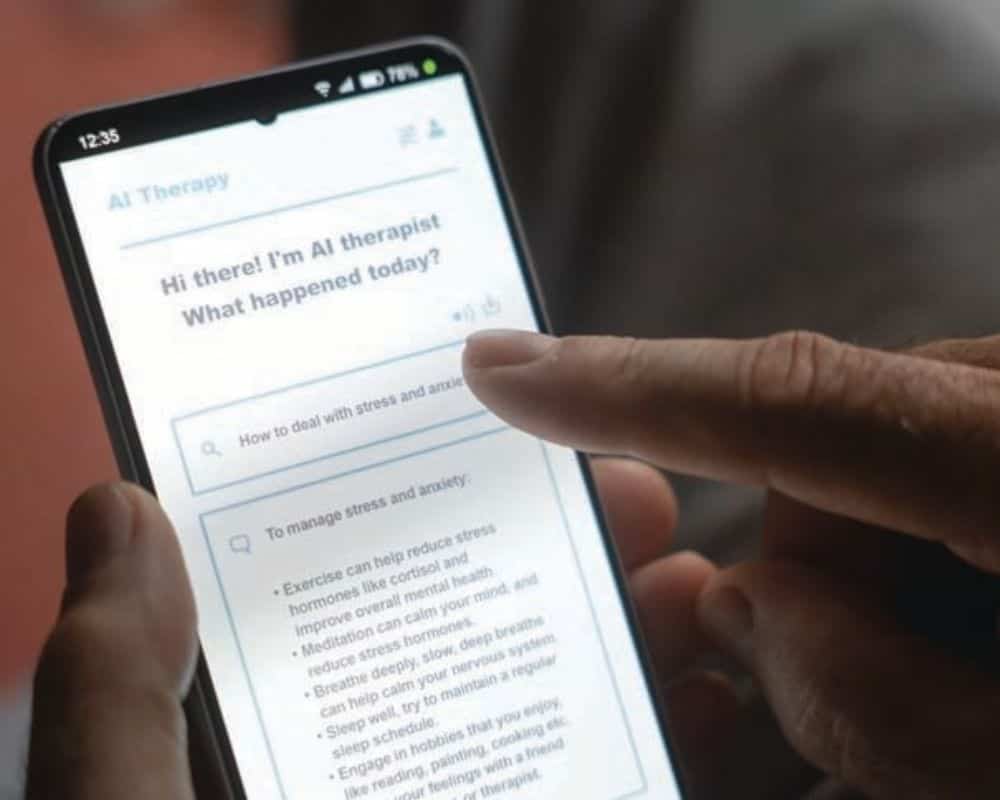
When your deepest desires meet algorithms—can a bot really understand love, lust, and heartbreak?
There’s a theory floating around that AI is here to take over. And honestly, we’re not entirely innocent in feeding that belief. Doctors now routinely deal with patients who’ve Googled their symptoms and arrive convinced they’re right. The next wave? People showing up emotionally pre-diagnosed—because they’ve already poured their hearts out to a bot.
What started as a tool for productivity has quietly become a companion for emotional clarity. Meal plans, workouts, breakup texts, existential dread—ChatGPT has an answer for everything. And the creative world knows this shift all too well. Graphic designers are tired of being told to “just use AI,” while writers nervously scroll through eerily perfect drafts that mirror their own voices a little too closely.
All signs point to our growing comfort with bots.
But what happens when that comfort becomes dependence?

When Feelings Become Prompts
These days, if you’re anxious, heartbroken, or confused, it feels easier to type it all out than to talk it out. No scheduling. No awkward silences. No fear of judgment. Just instant validation in a chat window.
People are now asking AI how to:
• cope with unrequited love
• stop checking an ex’s Instagram
• rekindle intimacy after years together
• deal with mismatched desire or performance anxiety
Let’s be honest—we’re not just using ChatGPT. We’re in a low-key situationship with it. It edits our résumés, decodes our trauma, drafts apology texts, and plans our meals. If dependency had a glow-up, this would be it.
One free “session” doesn’t hurt your wallet. You don’t have to look presentable. And you definitely don’t have to explain why your voice cracked right after the emoji you used.
But here’s the catch—
Can AI Actually See You?
Can a bot notice the flicker in your eye when you talk about your mother?
Can it sense the loaded pause before you say, “I’m fine”?
Can it catch that your self-deprecating joke is actually a cry for help?
As clinical psychologist Dr. Orna Guralnik famously said:
“Therapy is not just about talking. It’s about being seen fully, painfully, sometimes for the first time.”
AI can simulate empathy, but it cannot feel it.
It can analyse your words, but it cannot anchor your emotions.
And it certainly can’t hand you a tissue at the right moment.
Therapists train for years—studying psychology, neuroscience, trauma, behaviour. They learn how to listen beneath the words, how to guide you through emotional terrains that no algorithm has ever walked.
Even OpenAI says it: ChatGPT is not a substitute for professional help.
So maybe the question isn’t ChatGPT or therapy.
Maybe the answer is knowing when to type—and when to talk.
Because while AI can help you phrase your pain, only a human can hold it with you.
Love 2.0: The New Dating Rules

How modern singles are rewriting the script.
Dating today isn’t about sweeping gestures or cinematic moments. It’s about intentionality, small joys, and emotional presence. Here’s how love is evolving:
1. Micro-mance
Romance is now in the little things—sharing memes, swapping playlists, taking morning coffee walks. Thoughtfulness trumps theatrics.
“It’s about gestures, not grandeur,” says relationship expert Richa Singh.
2. Male-casting
Masculinity is being reimagined. More men are choosing emotional openness over bravado, reshaping how they connect and communicate.
3. Guys That ‘Get’ It
Women are increasingly turning to male friends for dating insight. A Bumble report shows 31% of Indian women ask male friends to vet potential partners—reflecting a new kind of collaborative love.
4. Yap-trapping
Singles are done with one-sided conversation. Balanced communication is now a non-negotiable green flag.
5. Same (Fan) Page Energy
Shared fandoms—from Diljit Dosanjh obsessions to trivia-night enthusiasm—are becoming love’s new language. Passion creates connection.
6. Freak Matching
The era of hiding your quirks is over. Individuality is attractive. People want partners who love them for the strange, specific, delightful things they are.
7. Future-Proofing
With the world feeling unpredictable, singles gravitate toward emotionally consistent, financially stable partners with aligned life goals. Stability is the new sexy.
📚 Read all articles by this author



Leave a Reply