

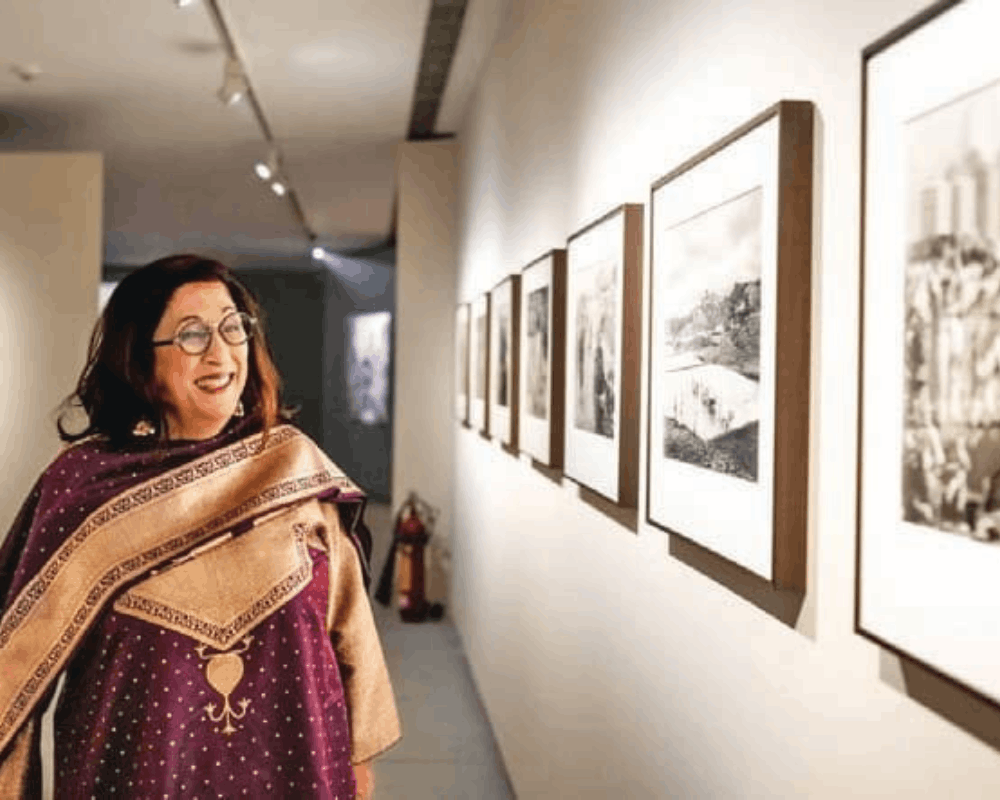


On winter evenings in Delhi, culture rarely announces itself with spectacle. It arrives softly—through the warm afterglow of a museum lobby moments before closing, or the hushed, persuasive conversations inside a Gurugram gallery nestled among glass-fronted corporate towers. It lingers in rehearsal rooms where lights remain on long after traffic fades. Holding this vast, restless cultural landscape together is an often-unseen force: women who have chosen patience over performance, continuity over clout. Through years of quiet, consistent labour, they have subtly reshaped how the capital region encounters, understands, and values art.
This transformation begins with a redefinition of what a museum can be. When Kiran Nadar established the Kiran Nadar Museum of Art (KNMA), she disrupted convention by situating contemporary art within accessible public spaces across Delhi and Noida. By foregrounding education—through guided walkthroughs, talks, and school outreach—KNMA dismantled barriers of exclusivity, cultivating new audiences and reframing patronage as a long-term public commitment rather than a private indulgence.
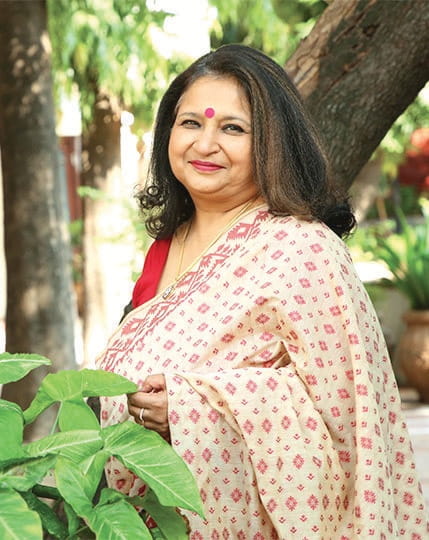
If museums provide grounding, experimental spaces keep the ecosystem dynamic. For over two decades, Pooja Sood has led the Khoj International Artists’ Association with an uncommon faith in process. In a city driven by speed and immediacy, Khoj’s most radical offering has been time—along with the trust that allows artistic ideas to evolve without pressure. Many of India’s contemporary artists trace their formative years to its studios.
Amid constant cultural churn, continuity itself emerges as an act of quiet resistance. When Renu Modi founded Gallery Espace in 1989, contemporary Indian art was far from mainstream. Through unwavering commitment—season after season, decade after decade—Espace cultivated an audience willing to mature alongside artists. Its longevity has served as institutional memory, shaping taste through persistence rather than trend.
Within this ecosystem, patronage has evolved into something resembling civic infrastructure. Through The Gujral Foundation, Feroze Gujral has shifted the focus from collecting to enabling—supporting commissions, absorbing risk, and fostering long-term artistic thinking. Similarly, Shalini Passi operates at the intersection of art, philanthropy, and cultural advocacy. As founder of the Shalini Passi Art Foundation and the platform MASH, and through her advisory role at Khoj Studios and patronage of the Kochi-Muziris Biennale, she has strengthened frameworks that sustain contemporary practice.
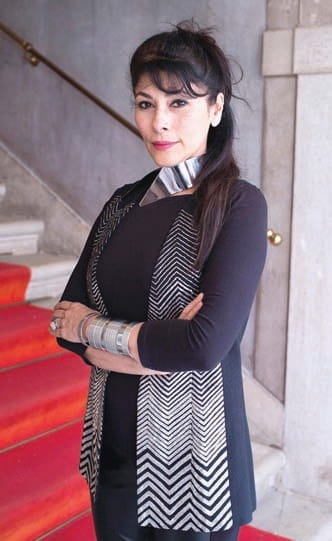
This ethos extends beyond galleries into the making of cities themselves. In Gurugram, Swanzal Kak Kapoor co-founded Saka Studio, an award-winning architectural practice that integrates craft, ecology, and cultural memory into revitalised urban spaces. Alongside her, Latika Thukral—who founded iamgurgaon after a corporate career—has developed collaborative models of urban renewal where art, community, and civic life intersect.
Crucially, this network ensures that tradition is not eclipsed by modernity. Through Art Tree, Pragati Agarwal has spent over a decade championing folk and traditional arts practised by women, amplifying voices from Madhubani to Warli. In parallel, Manjari Chaturvedi, founder of the Sufi Kathak Foundation, repositions classical and Sufi traditions as living, evolving forms—reminding audiences that deep listening is itself a cultural practice.
Together, these women have transformed the region’s cultural grammar. Delhi and Gurugram no longer exist as parallel worlds, but as a single, porous ecosystem. Their legacy is not loud. It lives in institutions that endure, audiences that return, and a cultural life resilient enough to hold—quietly and confidently—against the pressure of time.
📚 Read all articles by this author

Leave a Reply