

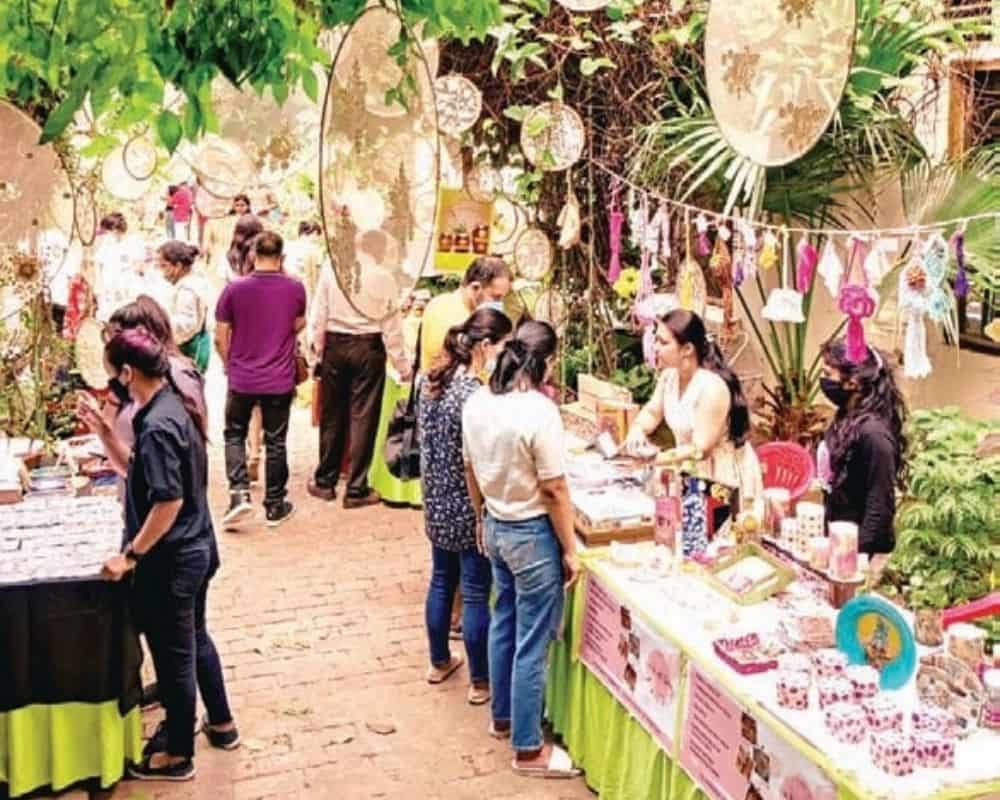
At Lucknow’s historic Habibullah Estate, the Farmers Market is more than an event — it’s a movement that reconnects people, planet, and purpose.
In the leafy heart of Hazratganj, the 250-year-old estate rises like a quiet reminder of Awadhi elegance. Its colonial arches, antique gateways, and sun-dappled verandahs once echoed with the charm of another era. Today, those same corridors hum with a new kind of energy — one rooted in sustainability, culture, and community. At the helm of this transformation are Amar and Jyotsna Kaur Habibullah, both St. Stephen’s College alumni who returned to Lucknow in 2010 after thriving corporate careers in Dubai and Mumbai.
Their choice to restore — rather than sell — their ancestral home was a leap of faith. In preserving its soul, they sowed the seed for what would become the Lucknow Farmers Market (LFM), a pioneering urban movement redefining how modern cities embrace mindful living.

Seeds of Change
When the restoration of Habibullah Estate was completed in 2012, it became clear that this wasn’t just an architectural revival. Jyotsna, drawing from her work with women’s groups and her stewardship of the family’s mango orchards, envisioned the estate as a living, breathing space with purpose.
“I wanted this space to serve more than nostalgia,” she shares. “It had to nurture a way of life.”
That vision sprouted in 2015, when the first LFM was held on the estate’s lawns. What began as a modest gathering of organic farmers soon grew into India’s first sustainable lifestyle platform, connecting more than 5,000 farmers, artisans, and green start-ups with conscious consumers across the country. From an annual event to a monthly celebration, LFM blossomed into a space where heritage architecture meets ecological consciousness.

Inspiring a Movement
The heart of LFM beats with five principles: Rethink, Reduce, Reuse, Recycle, Restore.
Here, sustainability isn’t a trend — it’s an invitation to live more thoughtfully.
Market-goers wander through stalls of fresh seasonal produce, handmade cheeses, cold-pressed oils, organic grains, herbal infusions, and hand-crafted goods. Every product carries a story — of ethical farming, chemical-free cultivation, and livelihoods uplifted.
But LFM is not just a place to buy better food. It’s where conversations around food security, conscious consumption, and sustainable futures take root. Over the years, it has impacted lakhs of families, fostering awareness, empowerment, and meaningful livelihood opportunities.
“Our goal,” Jyotsna says, “is to make sustainability a lifestyle that feels joyful and inclusive.”
A Sense of Belonging
The market has evolved into an immersive cultural and wellness experience. The Wellness Edition, a seasonal favourite, blends yoga, meditation, and breathwork with stalls offering clean skincare, aromatherapy, and herbal teas.
Another signature experience, the Handloom Walk, honours India’s rich weaving traditions and aligns with celebrations like National Handloom Day, Teej, and Raksha Bandhan. Under the estate’s timeless arches, fashion, food, craftsmanship, and community come together in effortless harmony — whether during the main market or the much-loved Fosho Brunch.
A Sustainable Ecosystem
Self-described “philanthropreneur” Jyotsna has nurtured LFM into a self-sustaining ecosystem. Artisans, farmers, and women-led start-ups gain mentorship, market access, visibility, and a community that champions their craft. Proceeds from LFM events go back into the heritage estate’s upkeep while enabling small producers to grow and thrive.
The initiative further extends into rural empowerment through the Awadh Mango Growers Association and the UP Mango Festival, both spearheaded by Jyotsna to support eco-tourism and farmer entrepreneurship.
Heritage as a Living Idea
For the Habibullahs, heritage is not something to preserve behind glass; it’s something to live.
“History must live to have meaning,” says Amar. “The estate is not a relic, but a space for renewal — a meeting point between community, culture, and conscience.”
Today, the Lucknow Farmers Market stands as a shining model of how cities can honour their heritage while nurturing sustainable, local economies. It’s where farmers meet food lovers, yoga mats unfurl beside mango orchards, and the air is scented with both fresh basil and hope.
A place where heritage truly meets sustainability — and together, they flourish.
📚 Read all articles by this author
Leave a Reply