


Founded by Peter the Great in 1703, St. Petersburg exists in constant dialogue with its past. History here is not frozen in time—it cooks, paints, performs, and continually reshapes itself. The city’s grandeur feels lived-in rather than preserved, unfolding gently through everyday rituals and unexpected contrasts.
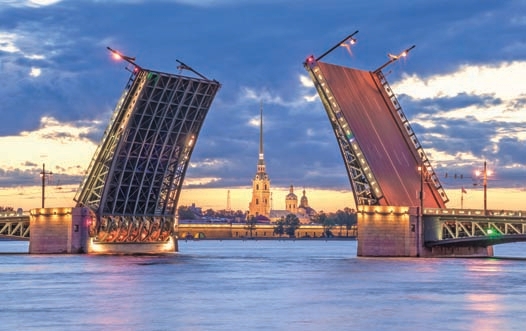
A gym designed like a neoclassical palace sits comfortably alongside pastel façades and shimmering Orthodox domes. At night, drawbridges rise with theatrical grace as boats glide silently beneath them. By day, cafés, chocolateries, and neighbourhood bakeries perfume the streets with warmth, lending the city an intimate rhythm beneath its imperial scale.
A Breakfast Festival That Tells a Story
One of the most evocative moments of the visit was the Petersburg Breakfast, a festival curated by the Saint Petersburg Convention Bureau. Chefs, pâtissiers, and restaurateurs came together to reinterpret the city’s breakfast traditions with imagination and finesse. Guests arrived impeccably dressed, the atmosphere charged with quiet anticipation.
A standout was the dessert competition, which invited participants to transform St. Petersburg into edible art. Drawing inspiration from the city’s architecture, literary heritage, and local ingredients, the confections became miniature narratives—sweet expressions of cultural memory and nostalgia.
Streets Layered With Time
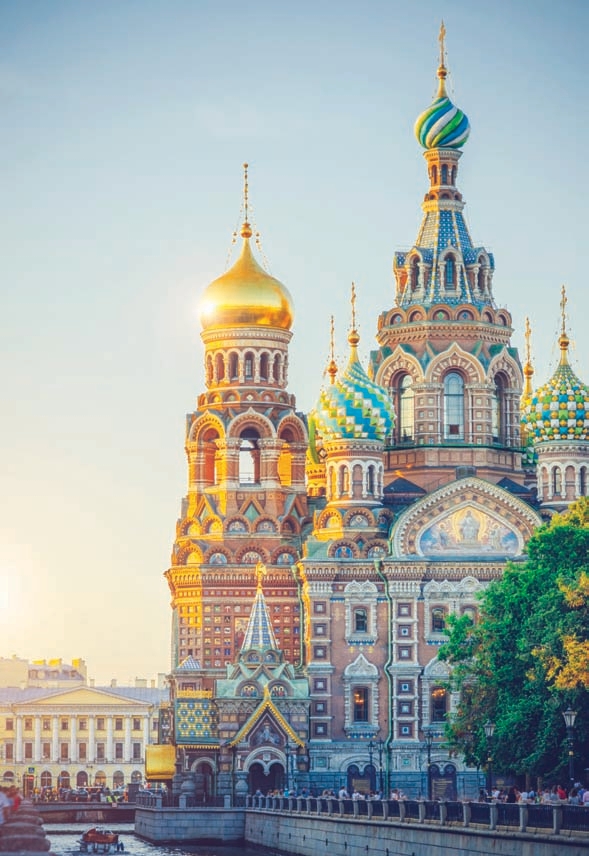
Walking through St. Petersburg feels like moving through a beautifully bound history book. The Church of the Saviour on Spilled Blood, with domes resembling enamel droplets, marks the site of Tsar Alexander II’s assassination. Nearby, Nevsky Prospekt unfurls as the city’s energetic spine, lined with cafés, boutiques, bakeries, and stately façades that hold centuries of stories within their walls.
Grandeur Revived: The City’s Hotels
St. Petersburg’s historic hotels preserve its old-world elegance with quiet pride. The Hotel Astoria, with its piano bar, winter garden, and storied ballroom, carries echoes of wartime resilience and artistic gatherings past.
Next door, the Angleterre Hotel continues to nurture the city’s creative pulse through its intimate cinema—restored in 1991 and once frequented by Madonna among its earliest visitors.
Art, Architecture, and Constant Reinvention
The city’s spirit of reinvention is most visible in its cultural spaces. The Manege Central Exhibition Hall, once the riding arena of the Imperial Horse Guards, now stands as St. Petersburg’s largest contemporary art venue. The Mikhailovsky Theatre remains consistently full, recently selling out performances of its dramatic Notre Dame de Paris ballet.
No visit is complete without the Hermitage Museum, home to more than three million artefacts. Remarkably restored within a year after a devastating fire in the 1970s, it remains a vast archive of global civilisation—from Egyptian relics and Afghan vases to European masterpieces.
As guide Maria Zotova observed, “The city’s severe climate inspires creativity. It reminds people of the great Russian writers and sculptors who worked here—and of the depth of our cultural heritage.”
A Cuisine Growing in Many Directions
Beyond its museums and theatres, St. Petersburg’s culinary landscape is expanding with quiet curiosity. Indian restaurants serving paneer tikka and biryani are increasingly embraced, even as traditional Russian fare retains its place at the heart of the city.
At the classic Katyusha Restaurant, a simple meal of dumplings, soup, cabbage salad, dried fruit kompot, and dessert—served by waitresses in floral dresses—captures the city’s understated warmth.
In a place shaped by emperors, artists, and long winters, renewal is not a break from history. In St. Petersburg, it is history’s most natural continuation.
📚 Read all articles by this author



Leave a Reply